USDA proposes end to roadless rule
By Wyoming News Exchange
August 25, 2026
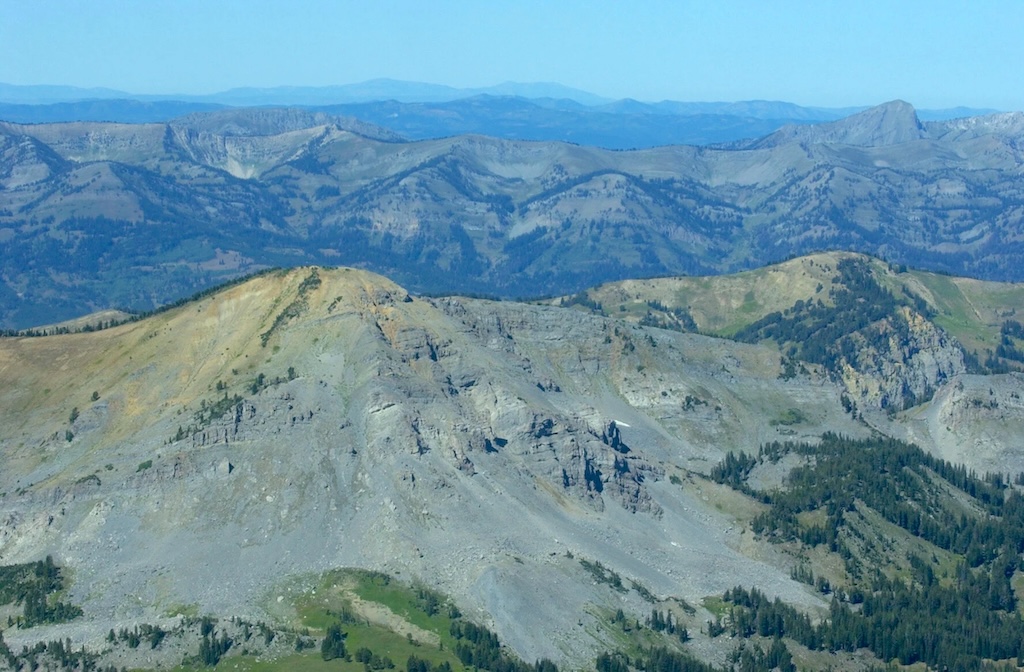
The Wyoming Range on the Bridger-Teton National Forest. Photo by Bradly J. Boner, Jackson Hole News&Guide.
By Mark Davis
Powell Tribune
Via- Wyoming News Exchange
POWELL — U.S. Department of Agriculture Secretary Brooke Rollins announced Tuesday a proposal to rescind the 2001 Roadless Area Conservation Rule in its entirety, calling the rule “a one-size-fits-all restriction that has frustrated land managers and served as a barrier to wildfire risk reduction work across large swaths of America’s national forests.”
“Our forests can’t afford another decade of inaction. Across the country, we’ve watched preventable conditions — overgrown stands, insect outbreaks and disease — turn healthy landscapes into tinderboxes,” Rollins said in a press release Tuesday morning. “For too long, outdated restrictions have kept tens of millions of forested acres off-limits to the very treatments that improve forest health and reduce wildfire risk to our communities. Today, we filed a proposal to restore authority to local forest managers who know the land best, removing the barriers that have kept them from doing the work the land demands. It’s time to turn the page on the failed roadless rule and return our forests to health and productivity.”
The 2001 Roadless Area Conservation Rule protects roughly 3.2 to 3.3 million acres of undeveloped national forest lands across nine national forests in Wyoming. It generally bans new road building and commercial logging in these areas. The rescission is intended to prioritize local agency decision-making over regulatory rules that are the same across the country, regardless of specific land management issues and needs.
“This proposed rule is commonsense policy sought since the first Trump administration. In the years since, the need for it has only become more apparent,” said Deputy Secretary Stephen A. Vaden. “It is a credit to President Trump that we can begin to put into place a rule that will allow us to properly manage our national forests, because the first step to managing forests is to have access to them.”
The agency will seek public comment on the proposal and on a draft of the environmental impact statement filed in the Federal Register. The rescission removes national designation of roadless areas but does not mandate timber cutting or road construction.
Gov. Mark Gordon said this step reflects a commitment to locally-driven, durable planning and empowering those who know these lands the best.
“Management of our public lands closer to the people that actually live, work and play there has been a steady drumbeat of mine during my time as governor of Wyoming. Proper management includes an opportunity to keep our forests healthy and less prone to fire dangers. Wyoming has demonstrated our commitment to sensible stewardship,” Gordon said in the USDA’s announcement. “The USDA and USFS, under the leadership of Secretary Rollins and Chief Schultz, are doing great work recognizing our efforts, making this trust a reality by rescinding the 2001 Roadless Rule.”
However, once again the news has spurred a number of protests warning the move that would open nearly 45 million acres of wild, unfragmented forest across 37 states to road construction, logging and other development.
Since Rollins announced in June 2025 that the Forest Service would rescind this rule, there has been major backlash, with more than 625,000 comments flooding the agency to oppose the rollback and a wide variety of people and organizations, including former Forest Service chiefs, voicing opposition.
The agency has yet to hold even a single public hearing on the proposal and there are only 30 days to respond during the public comment period, which ends on Sept. 17.
“Trump is pushing for the largest evisceration of public lands protection in American history and against what Americans want,” said Randi Spivak, public lands policy director at the Center for Biological Diversity. “These are some of the last truly wild forests left in the country, places that shelter endangered wildlife and protect our drinking water. Once you start bulldozing roads for commercial logging and industrial development, there’s no getting them back. Americans love their public lands and want them protected. We’re going to fight like hell to safeguard these wild places for future generations.”
In the northern Rockies, the center worries about how current wildlife conservation programs would be affected by the proposal.
“Roadless forests are lifelines for grizzly bears and Canada lynx across the northern Rockies,” said Kristine Akland, northern Rockies director for the center. “Grizzlies need these areas to den and raise cubs and lynx populations are already declining as mature forest habitat disappears. Building roads and allowing logging in these wild areas would make an already difficult situation for these species even worse.”
The Center also said that more than 370,000 miles of roads already fragment U.S. national forests, with a maintenance backlog in the billions of dollars. They are also concerned about wildfires, but insist ending the roadless rule would mean more fires.
Most wildfires are human caused and occur near roads, with a decades-long, nationwide study finding human-caused wildfires are four times more likely in areas with roads than in roadless forests. According to a study published in January, from 1992 to 2024, in all eight contiguous-U.S. Forest Service regions combined, wildfire-ignition density was lowest in designated wilderness areas, followed closely by Inventoried Roadless Areas. The highest wildfire-ignition density was in lands within 50 meters of roads.
Funding for the study was provided by The Wilderness Society. Yet another conservation organization is threatening lawsuits to stop the move; seemingly common in moves to change conservation regulations by the government.
“For 25 years, the Roadless Rule has kept our wildest forests intact. The benefits have been incalculable for people, for water, for wildlife, and for the climate,” said Earthjustice President Abigail Dillen. “Now, the Trump administration wants to gut the rule and open up 45 million acres of roadless forest to clear-cutting and other harmful development enabled by roading. Scientists, wildland firefighters, and hundreds of thousands of Americans have fiercely opposed this attack on our public lands. Earthjustice has successfully defended the Roadless Rule for a quarter century, and we are not going to stop now.”