The Middle Ridge Habitat Restoration Project is underway in the Greys River area late in October.
Implemented in phases, the 21,000 acre project is designed to improve the habitat for mule deer, elk, moose and other wildlife, while opening up small timber harvests and providing safeguards against wildfire.
The Greys River Forest Collaborative, Star Valley Conservation District, Wyoming Game and Fish and the Bridger-Teton National Forest have come together for the multi-phase project.
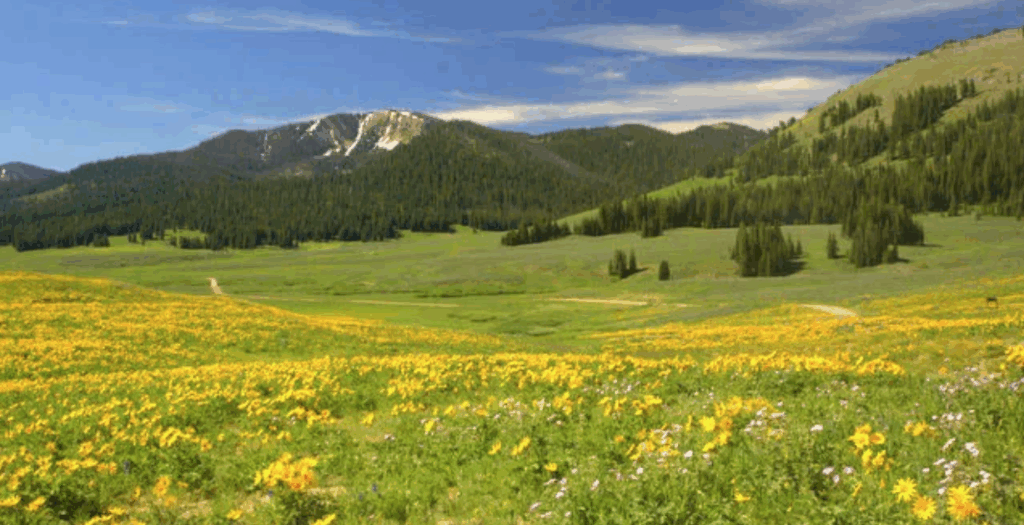
Troy Fieseler, Terrestrial Habitat Biologist with the Wyoming Game and Fish Department reported the Middle Ridge project is a “wildlife-rich area that supports some of western Wyoming’s most important big game habitats.”
He advised the, “project overlaps the designated Sublette Mule Deer Migration Corridor, including important stopover areas used by migrating deer. and it provides habitat for the Wyoming Range Mule Deer Herd” in addition to serving as “important summer parturition and winter habitat for elk and moose.”
Brett Story has coordinated the project on behalf of the Greys River Collaborative. The Collaborative works on projects designed to remove timber and restore habitat.
“The goals are many but basically it’s designed to enhance the large animal corridors, increase aspen restoration and assist in protections from fire,” Story said of the Middle Ridge project. “There are a number of projects nearby to increase the protection of this area by reducing fuel loading near the road and allowing for timber sales.”
A state grant to assist with the project came after matching funds helped launch the effort earlier this year.
“There are also many funding partners which created the matching funds necessary to win the State of Wyoming grant. The Greys River Ranger District, the Wyoming Game and Fish, Star Valley Conservation district and the Greys River Forest Collaborative all share in providing a part of this project implementation,” explained Story.
Noting the cooperation on Middle Ridge, Story advised, “We hope that this combination of partners and funders will lead to several more projects in the Greys River District.
He suggested, “There are many projects being developed that can start activities in the next few years and our hope is that we can build a number of projects that allow for a more thorough set of fuel breaks in the region that can protect the forest from catastrophic wildfire.”
He concluded, “There are even plans to look at the entire length of Star Valley for fuel reduction with small area timber sales within the wildlife urban interface of each community and the connecting areas between the communities.”
The initial phase of the Middle Ridge project will involve contract crews, coordinated by Wyoming Game and Fish Department, “felling conifer trees in forests supporting aspen.
“This will allow the density and canopy cover of aspen to increase and reinvigorate understory vegetation for the benefit of wintering elk, migrating and fawning mule deer, moose, and many bird and pollinator species dependent upon aspen, understory shrubs, grasses, and forbs,” the WG&F and B-T reported. “Water yield is also expected to increase concurrently with reductions in conifer canopy cover and increases in aspen trees. Additionally, reductions in conifer cover and rejuvenation of aspen stands will also, in the long term, create additional fire breaks east of the Greys River Road in the project area.”
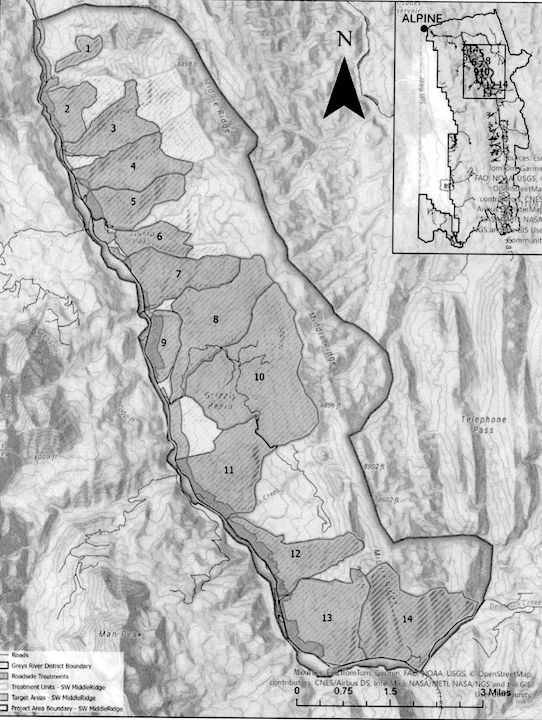
Initially, the B-T reported, “Up to 400 acres of aspen with heavy conifer cover will be targeted for treatment in the Hot Foot Creek drainage, smaller drainages nearby, and a south-facing slope about half a mile south of Moose Creek and east of the Greys River Road.”
In addition, work will continue at the site. “Over the next several years, up to 2,800 acres will be treated across a project area of about 21,000 acres, including felling of conifer trees in aspen stands and prescribed burning of mountain big sagebrush and mountain shrub land communities on southerly slopes,” the agencies reported.