Solutions considered to maintain valley’s EMS services
By Dan Dockstader
August 12, 2026
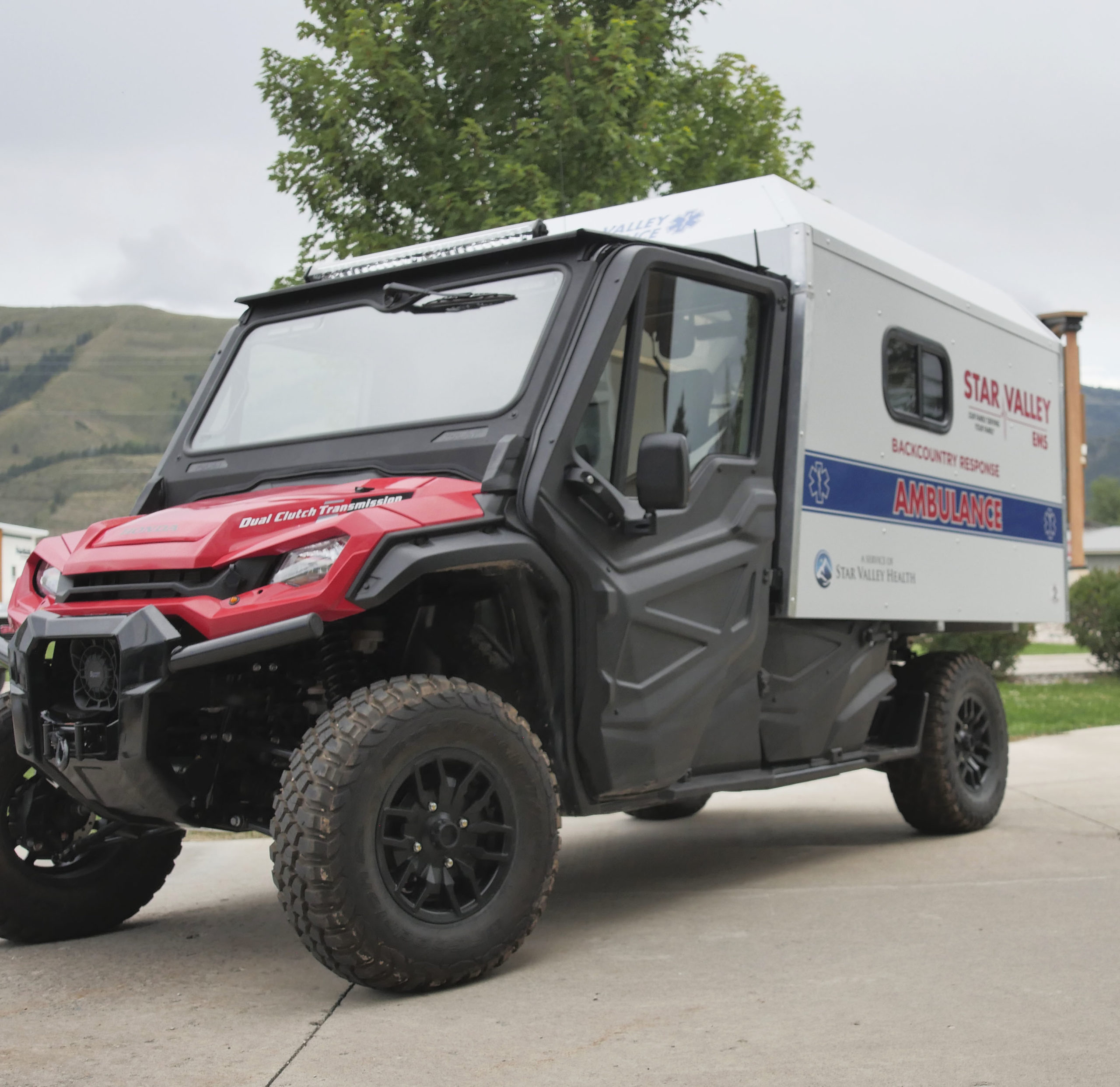
New Back Country Ambulance.PHOTOS COURTESY OF SV HEALTH
As Star Valley continues to grow, so does the demand for adequate Emergency Services. Known as EMS, the organization includes the personnel and equipment serving Star Valley.
In recent years EMS has come under the direction of Star Valley Health, as challenges for funding and staffing was addressed.
Dan Ordyna, Star Valley Health CEO reported an advisory council was created to address the challenges. The council includes community, county and health care representatives.
“Last year, about September of 2025, I pulled together representatives from each of the towns and the county,” Ordyna explained.
“We’ve had the mayors of each of the towns, we’ve had council members from each of the towns and we’ve had representatives from the county.”
Ordyna said the group has been meeting regularly and is focused on “what to do with EMS long-term” and creating a “sustainable model.”
RELATED: RADIO INTERVIEW WITH SVH CEO DAN ORDYNA –
He said, “The collaboration has been fantastic. There’s been a lot of back and forth, good questions and good discussion in those meetings.” He continued, “We’ve really helped each other understand the pressure points surrounding EMS and the funding issues that everybody is facing right now in trying to balance budgets and to keep things moving forward.”
As the working group addresses solutions, the contracts with Alpine, Star Valley Ranch and Thayne will expire at the end of 2026.
EMS District
An earlier proposal to create a specific EMS District for funding was brought before the County Commission but was rejected, Ordyna recalled. “Obviously, the county commissioners felt otherwise, he said of the decision not to accept the proposal for a district. “And, so now we’re back at the table trying to figure out the correct model of what to do with EMS going forward.”
SV Health/EMS
Ordyna explained why the hospital is helping with EMS in Star Valley.
“We got involved with EMS back in 2021 because we felt like EMS was really starting to fail in the valley,” he explained. “The volunteer model was deteriorating and with service calls, people were just waiting a long time. Quality of care was just going in the wrong direction.”
Ordyna advised that it was time for the hospital to help.
“We raised our hand because we felt like we were a funding source to keep this essential service alive,” he said. “We’re glad we did because we’ve spent millions of dollars in training, hiring and upgrading equipment and putting in place a delivery model that we believe is second to none in the state of Wyoming.”
He warned, “We just don’t want to see that go backwards but the problem is, EMS is not a hospital service. It’s something that we feel is connected to the hospital in many regards, but most organizations out there, they don’t try to figure out what to do with EMS because many states don’t deem it an essential service.”
Rural Health Funds
Ordyna continued, “Right now, we think that we can still continue to have this collaborative model with the towns and counties because of the Rural Health Transformation funds that have become available to us through the big beautiful bill that was passed in 2025. But that’s only gonna be for another year. So, it’s going be tough to go from year to year on how to fund EMS.”
Ordyna estimated it would cost $1.3 to $2 million in operating losses for the hospital to cover EMS.
The EMS working group will continue to address the funding challenges. Ordyna concluded, “I think that there is agreement amongst everybody that we need EMS in this valley.”